Tuesday, October 26, 2010

Purina Dreamride in the Flint Hills


It's been a busy fall so far, and it's hard to believe that we're only a month into it! Karen and I had a wonderful time on the Dreamride in the Flint Hills, one of the Pink 50 events here in Kansas (even though we got pretty wet on the afternoon ride - I'm still working on conditioning the saddles!). Then came the trip to Kentucky Horse Park in Lexington to spend time talking to horse people from all over the world about feeding horses, and watch the eventing, of course. Next was the Veterinary Conference that we host in St. Louis every year, and finally RFD TV Monday Night Live in Nashville. After all that whirlwind, it's good to be back home working on formulas, tags, writing, proofing and editing, posting on Facebook, and all the other regular day to day activities.
Back to the dreamride - this was the 11th annual Purina Dreamride, and I believe the 7th ride that I've been on. It's always a great time - seeing friends, eating great food, talking to horse owners (about feeding their horses, of course!), and riding through the tall grass prairie in Kansas. There's only about 4% of the original tall grass prairieland left in the US, and it's a rare privilege to be out there on your horse enjoying some of the most beautiful landscapes in the midwest. On top of all that, this year the ride went pink for the Purina Pink 50 Campaign. So the theme of the ride was raising awareness and support for breast cancer research, and there was pink everywhere you looked! Shirts, hats, bandanas, saddle pads, even polo wraps and boots on some of the horses were pink! What a great event. I was so proud to be associated with Purina and this important campaign, and also appreciative of the work that our own Ernie Rodina does to put on this wonderful event every year.
If you have not had the opportunity to attend one of the many Pink 50 events throughout the country, you can check our website http://www.horse.purinamills.com/ to see if there are any more scheduled in your part of the world. And if not, you can still participate by purchasing a pink bag of Strategy, Omolene 200 or Equine Senior. I'm thinking I might have to go buy a couple of pink bags just to have the bags (we feed bulk Strategy at our barn, so I don't usually have any bags), and maybe have someone make totes out of them! I saw on FB that people are doing this - some folks have such good ideas.

Monday, October 25, 2010

Is it allergy season?

I've always thought of spring as allergy season but I've been hit hard with some type of allergy reaction over the past couple weeks; sinus headaches, runny nose, etc. Just miserable. I've also gotten an increase in the phone calls and e-mails from horse owners concerned about allergies from which their horses seem to be suffering. So, I'm posting an article I've written on horses and allergies to help horse owners sort through how to deal with the various manifestations of alleric reactions in horses.

If you’ve ever experienced a horse with allergies, you know it can be a frustrating situation for both horse and horse owner. Frustrating for the horse with runny eyes and welts or itching and rubbing constantly while nothing seems to provide relief. Frustrating for the owner because you are trying desperately to find out what caused the problem and how to fix it.

Allergic reactions are essentially an immune system in over-drive. An allergy is an abnormal reaction by the immune system against a normally harmless substance. The first exposure to the allergen causes white blood cells to produce antibodies that prepare the immune system for the next encounter with that same allergen. No outward signs occur at this point. The antibodies attaches to mast cells that are found in the respiratory system, gastrointestinal tract and the skin. During the next exposure, the allergens will combine with the antibodies and release chemicals, such as histamine or leukotrienes, which produce the allergy symptoms. The resulting allergy symptoms depend on where in the body the chemicals are released, and are generally some manifestation of inflammation.

The most common symptoms in horses associated with allergies are skin irritations such as hives, welts, and itching (urticaria) or respiratory problems such as recurrent airway obstruction (RAO) which is very similar to asthma in people. Weepy eyes, nasal discharge or digestive upsets can also be symptoms of allergic reactions. These symptoms can be caused by contact dermatitis from exposure to organophosphate pesticides, heavy metals, dyes, bedding, topical medications, soaps, shampoos, blankets, wool and neat’s-foot oil. Other causes include atopy, an inherited predisposition to environmental allergen sensitivity, and “sweet itch” which is hypersensitivity to insects such as culicoides. Food allergies are commonly suspected but rarely prove to be the true cause of allergies in horses. Even in people, true food allergies affect only about 6 – 8% of children and 2% of adults.

An allergic reaction to protein normally causes what are historically referred to as "protein bumps" on horses. Instead of large soft welts, protein bumps are usually hard little bumps like a large BB under the skin. They may be a reaction to a certain protein, not necessarily of dietary origin, but may be from a protein injected in the skin when insects bite. Other skin reactions cause scabby eruptions on the skin that usually itch, causing the horse to rub enough to lose hair and even cause sores. These may be from an allergic reaction or a bacterial infection. Scabs can be cultured to determine if there is a bacterial infection and a regimen of antibiotics may resolve the issue.

Allergy symptoms such as hives, runny eyes, nasal discharge and coughing may be more indicative of an inhaled allergen. Removing long-stemmed hay and using a complete feed that is formulated to replace hay often helps alleviate these problems. Other management options including immersing hay thoroughly in water before feeding, feeding in a trough at ground level, wetting stall bedding or changing the type of bedding, and providing as much pasture time as possible will help minimize exposure to respirable dust and molds. In almost all cases symptoms due to inhaled allergens will improve if the horse is kept outdoors. Even short amounts of time in barns or trailers will exacerbate symptoms.

Determining the cause of allergy symptoms can be quite an exercise in trial and error. In humans, the gold standard for diagnosing food allergies is a double-blind, placebo-controlled food challenge. A reaction is expected within a few minutes to 2 hours after ingestion but this is a very involved and expensive procedure. Other allergy tests include a skin prick test or a patch test where extracts of various foods, or other potential allergens, are injected into the skin. Reactions (called weals) at the injection or prick site are measured to determine sensitivity level. Many horse owners opt for a blood analysis that will measure antibody levels to various potential allergens including insects, molds, pollens, plants and foods. These blood tests are a tool that may help identify potential triggers for allergy symptoms but often have a high rate of false positives, especially for identifying food allergens. Rarely do the allergy symptoms resolve when the diet is adjusted according to the results of these blood tests.

The only reliable diagnosis of a food allergy is an elimination diet. One difficulty with this is finding a diet that contains none of the identified potential allergens but still meets the horse's nutrient requirements. Sometimes that is absolutely impossible because of the long list of potential allergens. A horse that has previously been on a good plane of nutrition can be fed a hay-only diet for one to four weeks to see if the symptoms resolve. If they don’t improve then the symptoms weren’t caused by a food allergy and you have to look for other causes. If symptoms do resolve, then very gradually introduce one new food at a time in an effort to build a balanced diet that will not trigger an allergic response.


There is anecdotal evidence that feeding omega 3 fatty acids from a fat supplement such as Purina Nature’s Essentials AmplifyTM supplement may help resolve symptoms of skin irritation and inflammation. Feeding 1 – 1.5 lbs per day of AmplifyTM to horses suffering from sweet itch has been reported to result in cessation of itching and hair re-growth within 45 days.

If your horse is exhibiting allergy symptoms, get your veterinarian involved. They can help relieve discomfort associated with the symptoms and help you determine what changes in environment or management may best help manage through the symptoms. Then, just wait for a new season when most symptoms will spontaneously disappear....until next season.

Friday, October 22, 2010

Meet Leo and Willie - the Veterinary Services Lab cats

Leo (under the jacket) was named after my predecessor. Willie (gray tabby) was named after the founder of Purina - William Danforth.

We found these two brothers at about 6 weeks of age in a concrete form that was about to be filled with concrete during a construction project here on the farm. Now they live in luxury and are very spoiled by all of the Longview staff. Many employees drop by just to visit with Leo and Willie.

Tuesday, September 28, 2010

Dream Ride in the Kansas Flint Hills

This past week was a great week. I started out in St. Louis for our Horse VIP meeting where I was able to catch up with some of our ambassadors that have been with Purina almost as long as I have. Clint Haverty, very successful reining horse trainer from Krum, TX made his first trip up to see our research farm and he's been feeding Purina Strategy GX for nearly 15 years! It is great to see how much of an impact what we do here at Purina has on those that get to see it first hand. Hearing about the knowledge, research and dedication to the horse that goes into our products from someone else or in an advertisement just doesn't do it justice. Seeing what we do first hand and meeting the people that make it happen, like Mike Jerina, that's impressive, even for a long-time customer and very successful trainer like Clint. Thanks to Clint and all the other attendees for taking time to attend our meeting and reminding us how important what we do is to them and their horses.

Now, to get to the title of my blog....

After the VIP meeting in St. Louis, I went to Kansas for the 11th Anual Dream Ride in the Flint Hills. This event is a wonderful trail ride hosted by Ernie Rodina and his great crew. This year's event was a Purina Pink 50 event, where the emphasis was on breast cancer awareness. There were pink shirts, pink ribbons, pink splint boots on horses, pink saddle pads....it looked like a sea of pink rolling over the Flint Hills. This was special because it was not only a coming together of people who enjoy the outdoors and their horses, it was a coming together for the common cause of helping fight breast cancer and so many people on the ride had been impacted by this terrible disease in one way or another.

Now, if you love to ride and you have never been to the Flint Hills of Kansas, you are missing out. I know because I've been riding for all my life, mostly in competition of one type or another, not as much as a trail rider, but I've seen some beautiful country from the back of a horse. This was my first trip to the Fint Hills and it was absolutely special. You get to see that there are still vast, wide open spaces in this world. And, the folks that come to this trail ride, including the Best of America By Horseback crew, are great people. There's just nothing like spending a weekend horseback amongst the nicest people you'll meet, provided the best food you 'll eat and listening to fabulous campfire music. I so appreciate all the hard work that went into this event for all of us to enjoy, I totally enjoyed my ride.

I have to thank Dr. Katie Young for providing me with a great horse to ride this weekend, Ghus (Celtic spelling for Gus I think?), is a beautiful bay gelding that was just a joy to ride. I spent the weekend riding Ghus in Katie's fabulous dressage saddle, and by the way, I've never ridden a dressage saddle before this weekend and found it to be quite comfortable. I was glad though, that Ghus was smooth and dependable other than one little fun "celebration" he did after we crossed a gully, since there isn't quite as much leather available for grabbing in situations where you'd like to grab a little leather! Katie took pictures and video of the ride and I'm sure she'll find a flattering shot to post on here for me :-)

Katie and I enjoyed visiting with people on the ride about feeding their horses. There was a fabulous gelding there that was long-time Purina Equine Senior guy. You'd never have guessed he was 28 years-old. He was so bright, sound and happy on the trail ride, really cool. It was also neat to see all the people feeding out of Purina Strategy GX and Equine Senior bags at the trail ride, all pink bags for the Purina Pink 50 Campaign for breast cancer awareness month.

Just a great weekend on the Dream Ride in the Flint Hills of Kansas. What a fabulous time!

Wednesday, September 22, 2010

A Busy Time of Year - Heck isn't it always busy...?

We just finished up two big guest events here on the farm. First we hosted a group of 25 veterinary students from Purdue and Michigan State University. They were primarily interested in livestock research and medicine but there were some who had an equine interest as well, and they all really enjoyed the chance to see our equine research facility.

Next we hosted about 140 horse owners and feed dealer employees for a two day conference. Lectures were given by myself, Dr. Karen Davison, Dr. Randy Raub, Dr. Kelly Vineyard, Mike Jerina, Dr. Kent Lanter, as well as Equine Specialists. (Equine Specialists are uniquely qualified and trained members of our sales force, most have a background in the horse industry and many have advanced degrees in animal science and nutrition). The guests had a great time attending a reception and dinner in their honor, followed by a day here at Longview featuring lectures about feed manufacturing, feed tags, nutrition and other aspects of horse health and management. A Q & A session allowed them to ask any questions they liked, and they ranged from inquiries about how to feed a particular horse to how to best prepare a mare for breeding. It was a great event and I really enjoyed getting to meet all of these wonderful horse people from around the country. As usual, our top-notch staff at the equine research facility had the horses, barns and exercise physiology lab looking their best and were on hand to answer questions about our herd and our day-to-day operation. Thanks to them and my fellow Horse Business team members for another successful event.

Next up here at Longview ---we are hosting close to 500 equine veterinarians, veterinary technicians and 4th year veterinary students for our annual Equine Veterinary Conference. The conference features guest speakers who are the top veterinarians in the country in their specialty disciplines. Attendees receive continuing education credits for their attendance, as well as the opportunity to learn more about equine nutrition and findings from our recent and ongoing research projects. This is an event I really look forward to as it allows me to reconnect with colleagues and make new contacts with"soon-to-be" veterinarians. The students really enjoy the event because it allows them to meet future colleagues (and potential employers) in a fun and relaxed environment, and it also provides a much needed respite from the rigors of their final clinical year (think the interns on the old TV show ER). The veterinarians also enjoy a brief interlude from their practices and the opportunity to enjoy the one of the best times of the year in the St. Louis area.

Friday, September 3, 2010

Wow. It is already September. College football (a favorite of mine) debuted last night. Leaves are already turning. And I have hardly noticed that the summer has gone by. We have been so busy here at the farm, researching new diets and hosting events for customers and employees all the while keeping up the with daily work of operating an equine facility.

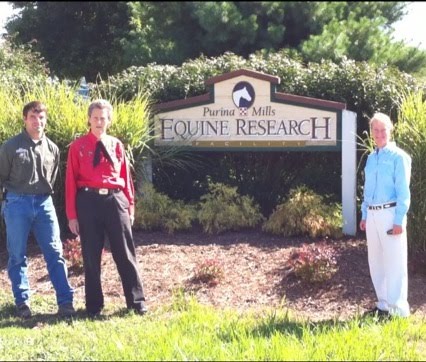
I was lucky enough to be the designated escort for Dr. Temple Grandin when she was here at Longview last week. She is an extraordinary person with a breadth of knowledge on many subjects. A conversation with her makes you truly appreciate the incredible journey her life has been. We were very grateful that she would make time in her busy schedule to visit with us. She was very excited about her upcoming trip to the Emmy Awards presentations in California and extremely proud that a movie showcasing her life and work was so well received. She felt it was a big step in her continuing mission to educate the public about animals in agriculture and humane animal handling practices. Congratulations on 7 Emmy wins.

Tuesday, August 31, 2010

Temple Grandin


Last week I had the opportunity to meet Dr. Temple Grandin when she spent a day at our research farm. If you are not familiar with Dr. Grandin, she's had a huge influence on the livestock industry with her innovative designs of livestock handling facilities, is a Professor of Animal Science at Colorado State University, and has conducted a great deal of research on animal behavior and management. She has also authored numerous journal articles and books, and is a consultant on facility design, livestock handling and animal welfare around the world. I've read one of her books and found it absolutely fascinating. So it was quite an experience actually getting to hear her talk about her thoughts and research results. She spent the day visiting the various species' units, and it was so much fun talking to her about our horses and facilities!

If you have not read Dr. Grandin's book "Animals in Translation", I highly recommend it, and I'm planning on reading "Animals Make Us Human: Creating the Best Life for Animals" as soon as I can. Of course, the movie about her life on HBO was also great, as evidenced by the multiple Emmy wins on Sunday night! And it was pretty cool seeing her live on TV at the Emmy Awards on Sunday night. I've got to think she had to just about fly directly from St Louis to California to make it to the show! What a privilege that she made time in her schedule for us.

Anyway, Dr. Grandin has remarkable insight into animal behavior, due to the similarities in perception and thought that she shares with animals. For instance, being autistic, Dr. Grandin thinks in pictures, not in words as most of us do, and research indicates that animals also think in pictures. This, as well as other unique characteristics due to the autism, enables her to look at the world and understand how animals perceive their surroundings, and share these observations with those of us who are not as in tune with what the animals see and how they react to what they see. I have to admit, owning and riding a very spooky horse (he's named "Boo" for a reason, after all) has been an education for me on viewing the world from a prey animal's perspective, but Dr. Grandin does an excellent job of verbalizing how and why animals react and behave the way they do. I think anyone who spends any time working with animals would benefit from Dr. Grandin's books or lectures. I know I did!